





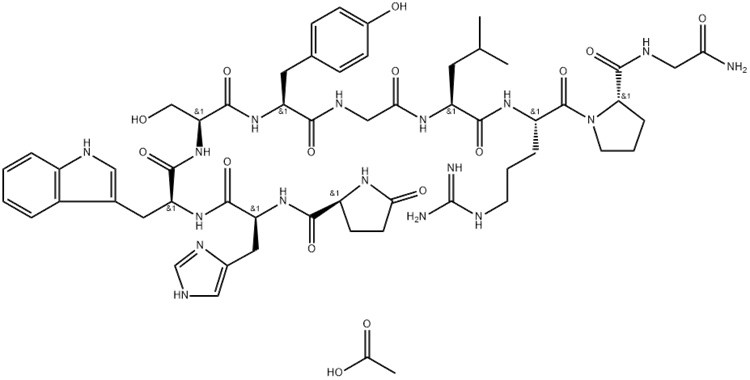
Gonadorelin Acetate
Advancing Fertility Treatments and Assisted Reproductive Technologies
The synthetic peptide hormone gonadorelin acetate represents a significant advancement in reproductive medicine. It has demonstrated strong potential in improving fertility treatment outcomes, particularly in assisted reproductive technology (ART) procedures such as in vitro fertilization (IVF), offering renewed hope to individuals and couples experiencing infertility.
What is Gonadorelin Acetate?
Gonadorelin Acetate is a synthetic analogue of gonadotropin-releasing hormone (GnRH), the natural hormone responsible for regulating:
- Luteinizing hormone (LH)
- Follicle-stimulating hormone (FSH)
Both LH and FSH are essential for ovulation in women and spermatogenesis in men. By modulating hormonal stimulation during fertility treatments, Gonadorelin Acetate helps optimize ovarian response, enhance embryo development, and improve oocyte quality.

The Need for Improved Fertility Therapies
Infertility affects millions of couples worldwide, creating emotional, physical, and financial challenges. While ART - especially IVF - has revolutionized fertility care, improving success rates remains a priority. Gonadorelin Acetate offers enhanced hormonal regulation that may significantly improve patient outcomes.
Insights from Clinical Research
A recent large-scale study evaluated the impact of Gonadorelin Acetate on couples undergoing reproductive treatments.
1. Enhanced Ovarian Response
Administration prior to controlled ovarian stimulation significantly increased the number of mature oocytes retrieved, expanding the pool of embryos available for transfer.
2. Higher-Quality Oocytes
Patients receiving Gonadorelin Acetate demonstrated improved oocyte quality, which is strongly associated with better fertilization and embryo development outcomes.
3. Improved Embryo Development
Embryos derived from treated cycles showed greater developmental potential, increasing the likelihood of successful implantation and pregnancy.
4. Safety and Tolerability
The therapy was well tolerated and did not significantly increase adverse effects compared to conventional fertility treatments, confirming its clinical safety profile.
Implications for Reproductive Medicine
The encouraging outcomes suggest that Gonadorelin Acetate may significantly enhance ART success rates. Its ability to improve ovarian response, egg quality, and embryo viability positions it as a transformative tool in modern fertility therapy.
Future Directions
Although results are promising, further research is necessary to:
- Determine optimal timing, dosage, and treatment duration
- Evaluate long-term pregnancy and live birth outcomes
- Assess comprehensive maternal and fetal safety
Ongoing investigations will help establish Gonadorelin Acetate as a standard component of global reproductive treatment protocols.
Conclusion
Gonadorelin Acetate represents a meaningful advancement in reproductive medicine. By enhancing ovarian response, improving oocyte and embryo quality, and maintaining a strong safety profile, it provides renewed hope for couples facing infertility.
As research progresses, this hormone therapy may become an essential component of modern ART protocols, helping more individuals achieve successful pregnancies and build families.